

 !
!


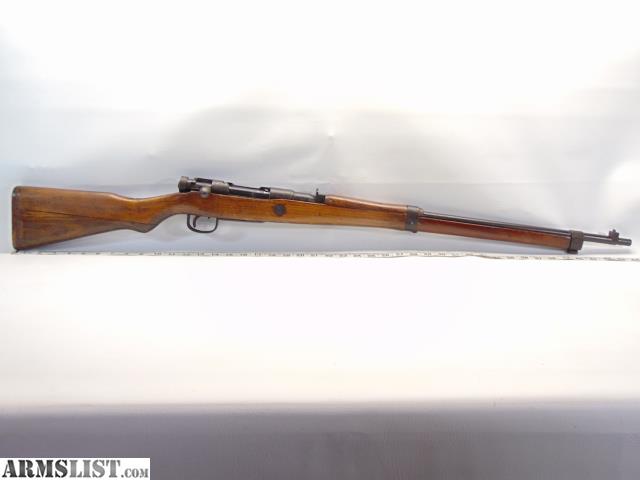
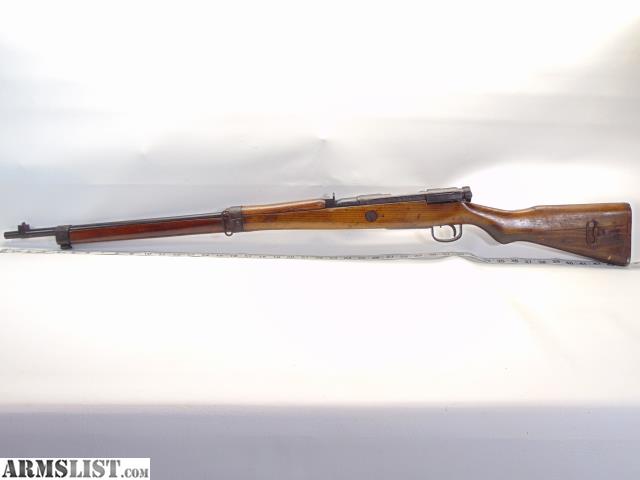
JAPANESE TYPE 99 ARISAKA 7.7MM RIFLE WITH MUM
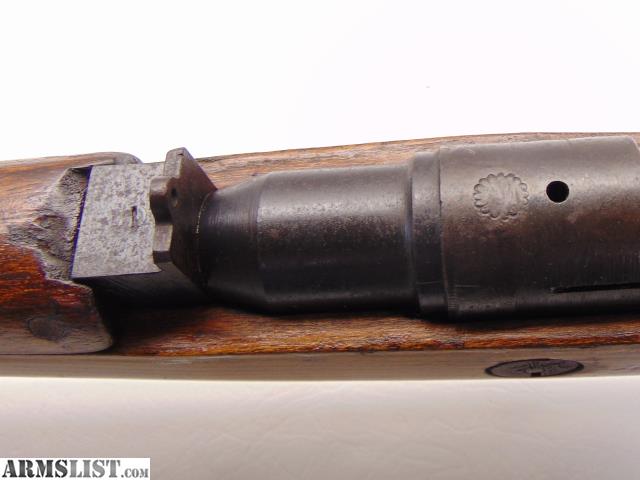
This is a Japanese Type 99 Arisaka 7.7mm Rifle with MUM, which was the Japanese military, last ditch model. It has some crude manufacturing as noted in the pictures. The bolt handle and serial number match. There are no other locations noted for serial numbers. Anything that looked like some type of marking a picture was taken. The mum is present. The butt of the weapon has a wooden plate versus a metal one. The Serial # is 72649. The rifle does have some slight rust and light pitting. The bore is shiny and rifling looks strong. It is an overall 44 inches and the barrel measures approximately 25.9 inches. More pictures available upon request.
The Japanese manufacturer for this particular rifle is Kokura Arsenal.
Rating: The overall condition of the rifle is “Fine” based on NRA Antique Firearm Conditions Standards. Please let the pictures show you the overall condition of the rifle. Please remember these were crude rifles with some sloppy manufacturing due to the end of the war was near and materials were in short supply.
History: The Type 99 rifle Arisaka or Type 99 short rifle was a bolt-action rifle of the Arisaka design used by the Imperial Japanese Army during World War II. During the Second Sino-Japanese War in the 1930s, the Japanese soon found that the 7.7mm cartridge being fired by their Type 92 heavy machine gun in China was superior to the 6.5×50mm cartridge of the Type 38 rifle, necessitating the development of a new weapon to replace the outclassed Type 38. The Imperial Japanese Army (IJA) developed the Type 99 based on the Type 38 rifle but with a caliber of 7.7mm. The Type 99 was produced at nine different arsenals. Seven arsenals were located in Japan, with the other two located at Mukden in China and Jinsen in Korea.
During the Korean War, approximately 126,500 short and 6,650 long Type 99 Rifles were re-chambered under American supervision at the Tokyo arsenal to fire the then-standard .30-06 Springfield cartridge. Apparently intended for the South Korean "gendarmerie", few rifles appear to have been issued at the end of the war in 1953. These rifles were fitted with a lengthened magazine well and had a small notch cut in the top of the receiver to accommodate the .30-06 round's 1/3 inch greater length. Accuracy suffered, due to the difference in cartridges, rifling rate and characteristics, but they were nonetheless functional.
The Type 99 is one of the strongest military bolt rifles ever made, but many late-war ("last ditch") rifles used lower quality parts, and a complete lack of finish, as well as shortcuts taken to ease production. The "last ditch" rifles are usually distinguished by their crudeness: poorly finished stock, wood buttplate, very obvious tooling marks in the metal, rudimentary sights and an unfinished bolt knob and handle. Unlike its predecessors, however, a disadvantage of the Type 99 was its increased recoil due to the lighter weight combined with a heavier cartridge.
Type 99 long rifle The initial production rifle of the Type 99. Made only by Nagoya Arsenal and Toyo Kogyo under Kokura Arsenal supervision. Only about 38,000 were produced, 8,000 at Nagoya and 30,000 at Toyo Kogyo between summer of 1940 and spring of 1941 when production was switched to the much more common new Type 99 short rifle of which millions were made. Like the early Type 99 short rifles, these rifles were made with a monopod, anti-aircraft lead arms on the rear sight and a dust cover.
Though the Arisaka rifle has never been exported to the United States in great numbers, there are thousands available—most having been brought home by Marines and soldiers returning from the Pacific theater. In many cases, the imperial chrysanthemum atop the receiver has been defaced by the surrendering Japanese in order to preserve the Emperor's honor: the mark indicated that the rifle was the Emperor's personal property. Rifles with an intact chrysanthemum often bring a premium on the collector market, sometimes almost double the price for a like model defaced rifle. Many have been rechambered to more common calibers due to the relative scarcity of factory 7.7×58mm Arisaka; it is particularly suitable for this due to its robust action.
The new gun, designated the Arisaka Type 99 7.7mm rifle, was initially produced in 1938 in two lengths. The earlier prototype had a slightly longer barrel and was heavier. A second prototype design for a gun to use the new 7.7mm cartridge was completed in 1939. This model was shorter (44 inches) and lighter (8.25 pounds) than the Arisaka Type 38. The Type 99 design was finally accepted for widespread use. The longer rifle was for infantry and the shorter for cavalry, engineers, and other specialty troops. However, only a few thousand longer Type 99 rifles were produced, and by 1940 it was decided to issue only the shorter rifle to all troops, even though the longer model remained in service.
 Private Party Details

 Location
 Shipping


