

 !


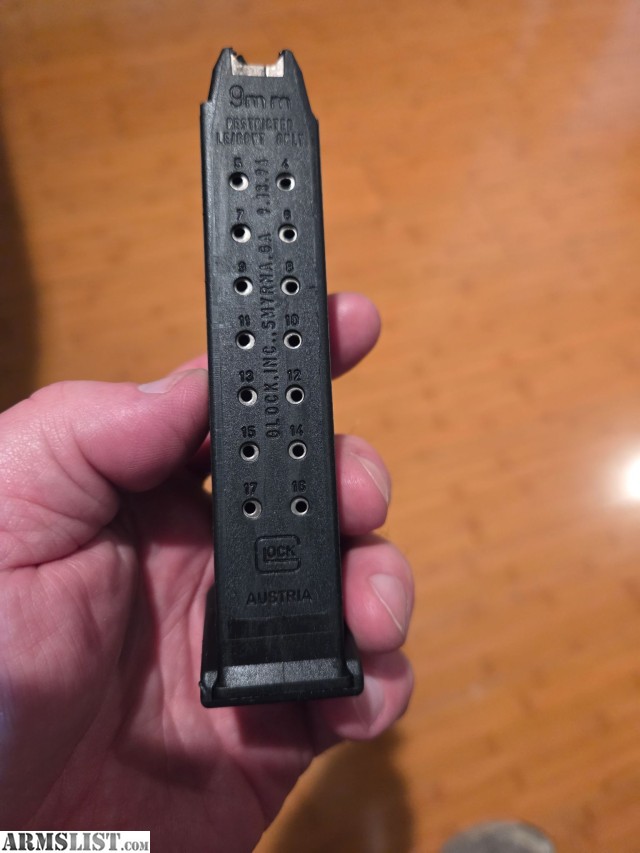
Comes with one restricted-marked magazine, case, papers (Gen2) and holster.
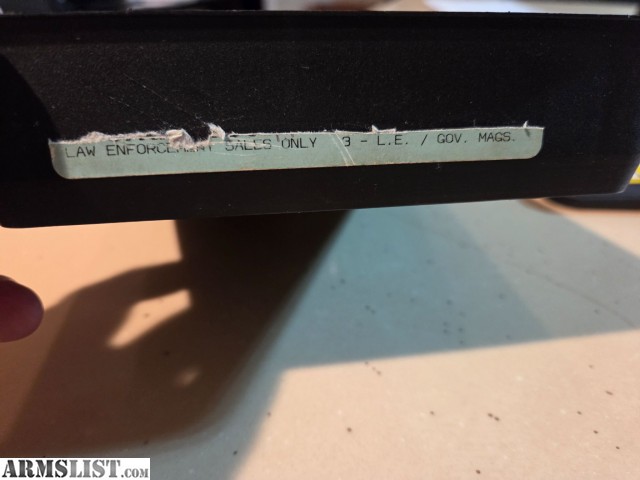
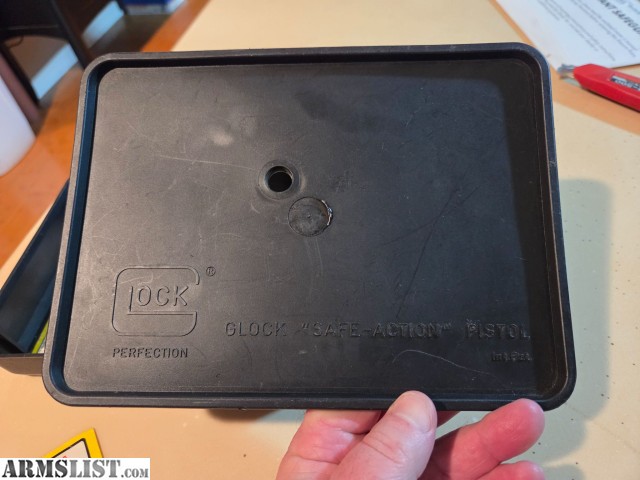
Case has a partial label as seen in the pics. One of the inside warning labels has become detached but is present.
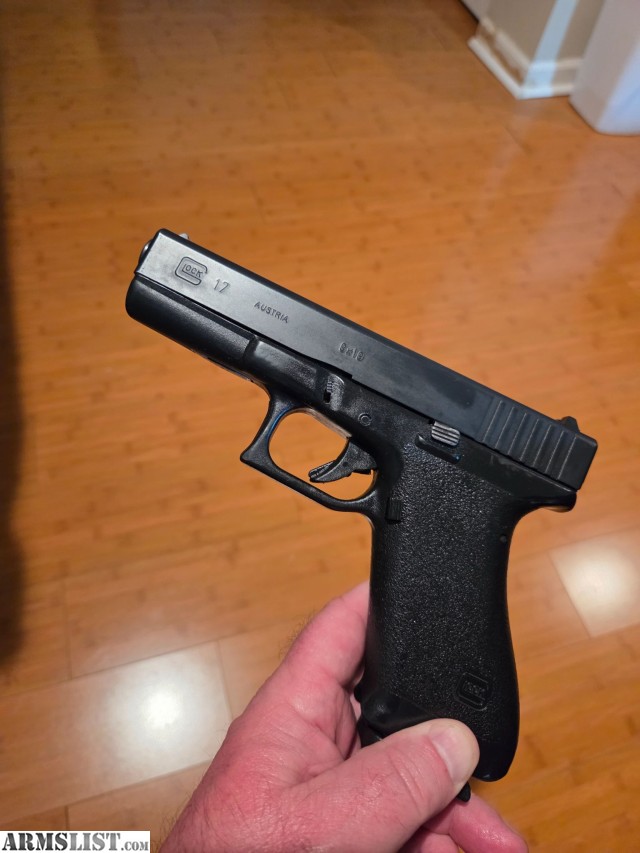
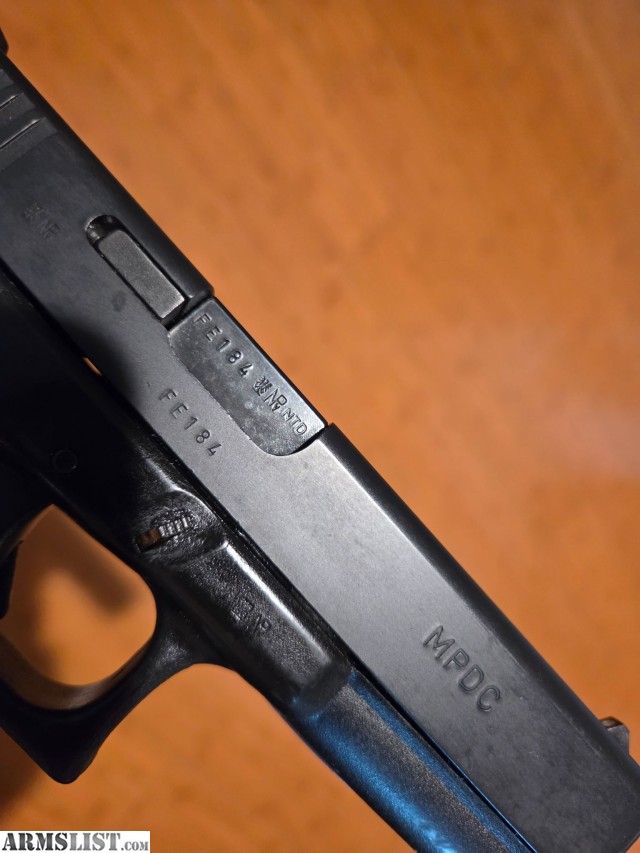
Here is a Glock 17 Gen 1 with the "FE" serial prefix, "MPDC" slide markings, an original "Tupperware" case, and a restricted-marked magazine.
This is a highly collectible piece that chronicles how polymer-framed handguns captured the U.S. police market.
The "MPDC" stamp on the right side of the slide stands for the Metropolitan Police Department of the District of Columbia.
**The next portion is from the internet and is believed to be factual, BUT DO YOUR OWN RESEARCH. Use this as a guide or a starting point.
In the mid-to-late 1980s, American police departments were rapidly moving away from traditional six-shot revolvers to semi-automatic pistols to counter the rising firepower encountered on the streets. MPDC was one of the very first major metropolitan police forces in the United States to adopt the Austrian-made Glock 17 as their standard-issue sidearm.
Glock manufactured roughly 3,000 First Generation Model 17s specifically for Washington D.C. cop holsters. Because these were true duty weapons carried for up to 25 years before being phased out and sold as police trade-ins around 2015, finding one today is a highly sought-after prize for Glock historians.
This pistol was manufactured right at the tail end of the Generation 1 production run, April 1989.
Gen 1 Glocks are instantly recognized by their smooth, un-contoured "pebble-texture" grip that wraps completely around the handle. It lacks the finger grooves of Gen 3 or 4 or the front/backstrap checkering seen on Gen 2.
Early U.S.-bound Glocks used a sequential two-letter prefix system followed by three numbers and a "US" suffix. The "FE" run is firmly nestled in the definitive Gen 1 era just before Glock introduced the Gen 2 frame profile in late 1988.
The original container is famously referred to by collectors as the "Tupperware" box.
It features a distinct polymer clamshell design with a central integrated post meant to secure the gun through the trigger guard.
Glock eventually discontinued this design for safety reasons (as a chambered round could theoretically be discharged if pressed improperly onto the post) and shifted to modern rectangular cases.
Having an un-cracked, period-correct Tupperware box dramatically spikes the financial value for collectors.
When Glock shipped firearms to commercial distributors, individual boxes received large white or yellow exterior stickers detailing the serial number, model, and configuration. However, for major law enforcement agency contracts like the Metropolitan Police Department of D.C. (MPDC), Glock typically shipped these contract orders in bulk crates containing dozens of individual "Tupperware" boxes.
A clean exterior box is highly versatile and considered completely period-correct for an MPDC trade-in pistol, while the mostly intact interior stickers prove the case wasn't scrubbed or damaged over the last nearly 40 years.
The most unique "twist" in this firearm's timeline is the "Restricted / Law Enforcement/Government Use Only" marked magazine. This marking stems directly from the 1994 Federal Assault Weapons Ban, which prohibited the manufacture of new magazines holding more than 10 rounds for civilian use.
Because this Gen 1 pistol was manufactured pre-ban, it originally shipped with a standard, unmarked 17-round magazine. However, because MPDC kept these firearms in service for decades, the department ordered fresh replacement factory magazines during the ban era (1994–2004). By law, Glock had to stamp those high-capacity duty magazines with the "Restricted" law enforcement warning.
When the gun was eventually sold into the surplus market after retirement, that Restricted-marked magazine stayed with it—serving as a cool historical timestamp of the exact era it was being carried on duty in Washington D.C.
This is a complete time capsule. It represents the intersection of Austrian engineering, a massive shift in American policing tactics, and a major era of U.S. firearm legislation.
I am an FFL.
Call or text Bryan:REDACTED/p>
Price is cash price, add 3% for cards.
 Premium Vendor Details

 Phone
 Website
 Location
 Shipping


