

 !
!


RARE Spanish Civil War P.V. Valencia Modified M1893 Mauser Bayonet – MATCHING NUMBERS
If you collect Spanish militaria, Civil War artifacts, or rare Mauser accessories, this is the kind of piece that almost never surfaces. This is a genuine, battlefield‐altered Valencia Arsenal emergency cutdown bayonet, fully matching, carrying both its Republican re‐issue number (P.V. 1220) and its original Toledo factory serial (G 3152). It is one of the most historically expressive Spanish bayonets you will ever handle.
This is not a reproduction, not a post‐war alteration, and not a parts build. It is a true survivor of the Spanish Civil War, carrying every scar, modification, and wartime improvisation that defines the Valencia Emergency period.
Quick Specifications
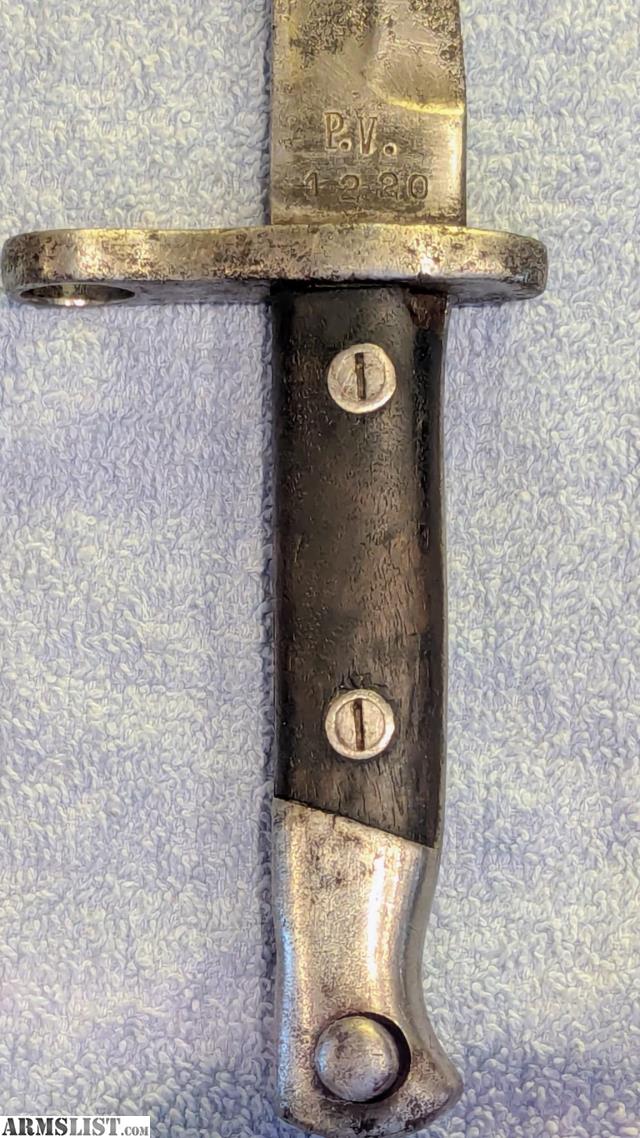
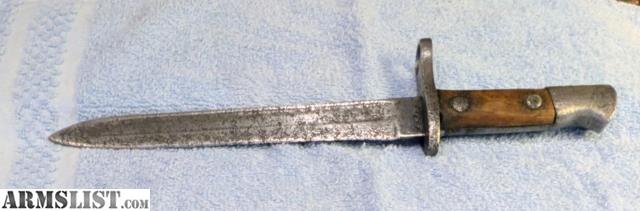
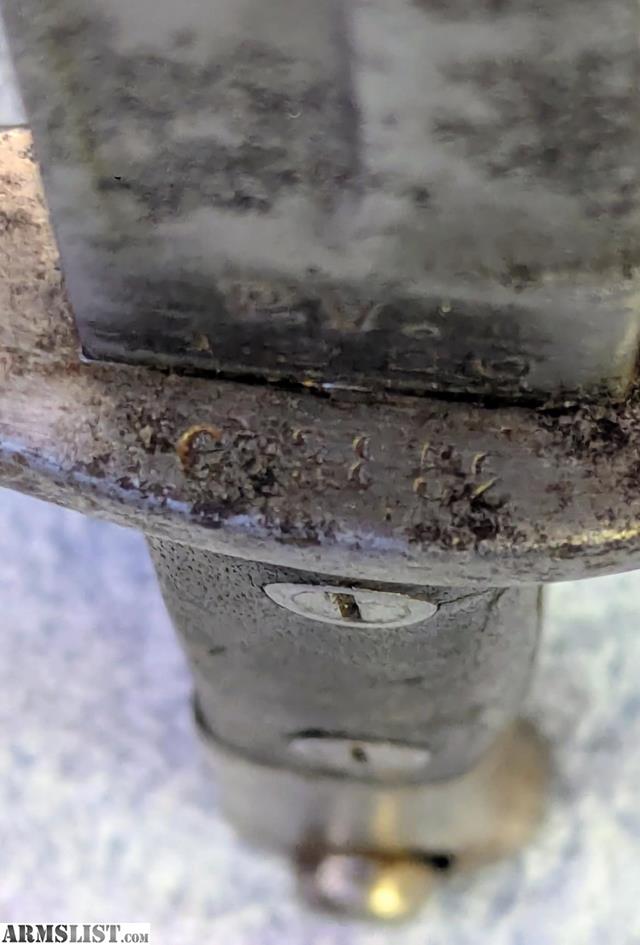
Model Type: Spanish M1893 Mauser Short Bayonet (“Valencia Cutdown”) Conflict Era: Spanish Civil War (1936–1939) Blade: Shortened spear‐point, approx. 8.5 inches, fuller running nearly to the tip Primary Arsenal Mark: Deep “P.V. 1220” stamp on right ricasso Matching Mark: Vertical “1220” on crossguard face Original Factory Serial: “G 3152” Toledo number on crossguard spine Ghost Crest: Faint remnants of the original three‐line Toledo factory crest on left ricasso Hidden Proof: Toledo inspector’s circular monogram beneath the grips Locking System: Scarce wartime riveted push‐button cap (unthreaded pin variant) Grips: Non‐matching smooth walnut field‐replacement scales Scabbard: None Condition: Fair/Good with genuine wartime pitting and oxidation Preservation: Stabilized with museum‐grade Renaissance Wax
Condition Disclaimer
Please review all photos carefully. This bayonet shows authentic wartime wear, including pitting, dark oxidation, and mismatched field‐made grips. These features are part of its historical identity. Item is sold as‐is, with no returns based on cosmetic imperfections.
The Biography of a Survivor: Bayonet G 3152 / P.V. 1220
This bayonet tells a story that spans decades of Spanish history. It began life in the peaceful years of the early 20th century, was violently transformed during the Spanish Civil War, and has now been professionally stabilized for long‐term preservation. Every mark on it reflects a moment in that journey.
Phase I: Birth at the Royal Arsenal (c. 1893–1910)
This weapon was originally produced at the legendary Artilleria Fábrica de Toledo, Spain’s premier arms factory. It left the arsenal as a full‐length M1893 Mauser bayonet, paired with the 7mm Mauser rifle that earned fame at San Juan Hill.
Toledo craftsmanship was exceptional: bright steel finish, deep fuller, precise machining, and finely checkered walnut grips. An inspector stamped a circular monogram into the tang. Serial G 3152 was issued to a soldier of the Spanish Crown during a period of uneasy peace.
Phase II: The Valencia Emergency (1936–1939)
When Spain erupted into Civil War, the Republican government lost access to major northern arms factories. The Parque de Artillería de Valencia became the desperate hub for repairing damaged weapons returned from the front.
Bayonet G 3152 almost certainly arrived at Valencia broken, corroded, or snapped. What followed was a series of wartime improvisations that define this rare variant.
Political Erasure
The royal Toledo crest was aggressively ground off. Faint “ghost” remnants still remain on the ricasso.
Blade Cutdown
A damaged blade was shortened from 10 inches to an emergency 8.5‐inch spear‐point. Because the cut was done manually, the fuller now runs nearly to the tip — a hallmark of Valencia work.
Riveted Locking Cap
Shortages of threaded components forced the arsenal to rivet the push‐button cap directly to the pommel using a solid unthreaded pin. This variant is scarce and highly collectible.
Field‐Made Walnut Grips
The original checkered grips were gone. Valencia workers carved smooth replacement scales from salvaged walnut scraps. They are mismatched, asymmetrical, and absolutely authentic to the period.
Republican Re‐Serialization
The arsenal stamped “P.V. 1220” on the ricasso and a matching “1220” on the crossguard, officially re‐issuing the bayonet to Republican frontline units or militia formations.
Phase III: Scars of War & Modern Conservation
After the war ended in 1939, this bayonet survived decades of storage. The left blade face and crossguard show deep pitting — the kind caused by damp trenches, mud, and poor wartime conditions.
Modern conservation focused on stabilization, not restoration:
-
Internal spring cavity flushed; locking mechanism now functions smoothly
-
Active rust removed from lug slot, muzzle ring, and blade pitting
-
Entire bayonet sealed in Renaissance Wax to halt oxidation
The wax can be removed with mineral spirits if you prefer a raw finish.
Collector Significance
This bayonet checks every box collectors look for:
-
Fully matching P.V. 1220 Valencia modification
-
Original G 3152 Toledo serial still present
-
Hidden Toledo inspector proof
-
Ghost remnants of the royal crest
-
Rare riveted push‐button cap
-
Authentic wartime replacement grips
Because it is a confirmed matching Valencia arsenal piece, it avoids the usual value penalties associated with pitting. Its combination of royal‐era origins and Republican wartime modifications places it in an elite tier of Spanish Civil War collectibles.
This is not just a bayonet — it is a reference‐grade artifact of wartime improvisation.
If you want additional photos beyond Armslist’s limit, message me and I’ll gladly provide more.

 Private Party Details

 Location
 Shipping


