

 !
!


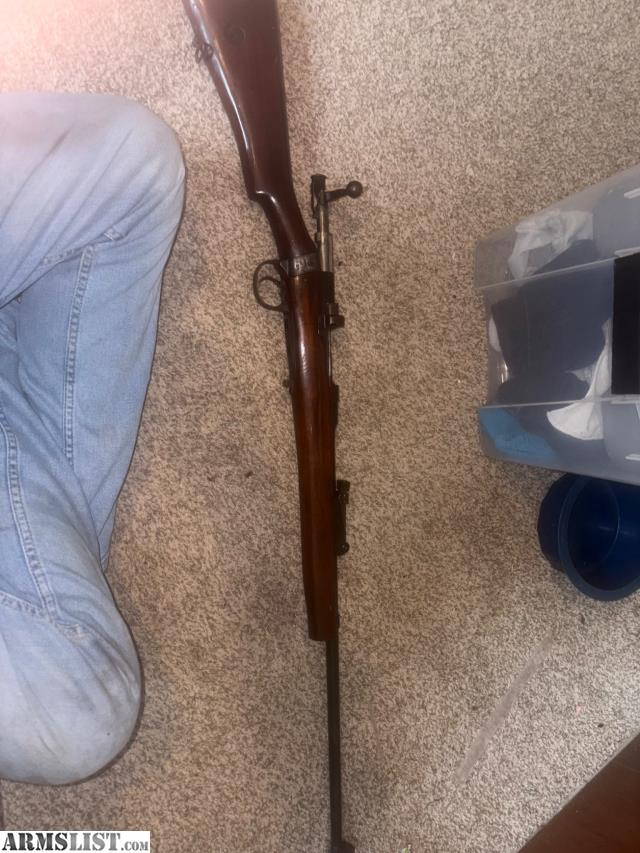


- G.R.: This stands for Georgius Rex (Latin for King George), referring to King George V, who reigned during World War I. This marking indicates the rifle was produced for military service.
- SHT.L.E. or SMLE: These are abbreviations for "Short, Magazine, Lee-Enfield." The name refers to its 10-round detachable magazine and a length that was a compromise between a long rifle and a cavalry carbine.
- III or III*: This designates the rifle's model, the Mk III, which was adopted in 1907. An asterisk (
*) denotes a slightly later, simplified version introduced during the war. The Mk III* removed the magazine cut-off and volley sights to speed up wartime production. - 1917: The year of manufacture.
- Manufacturer: The stamp on the butt socket or receiver may also indicate the manufacturer. Common examples include Enfield (Royal Small Arms Factory) or BSA (Birmingham Small Arms).
Key features
- Caliber: It fired the standard British .303-inch caliber, rimmed cartridge.
- Magazine: It featured a 10-round, detachable box magazine that was typically loaded with 5-round stripper clips.
- Rate of fire: The rifle's fast, smooth-cycling bolt action and 10-round magazine allowed a trained rifleman to achieve a very high rate of fire, with some German soldiers mistakenly thinking they were facing machine guns.
- Reliability: The Lee-Enfield was known for its reliability and its action was considered easy to clean, an important feature for the mud of trench warfare.
Production and modifications
The SMLE Mk III was produced by a number of manufacturers in Britain and the Commonwealth. Wartime shortages led to manufacturing simplifications in the Mk III* version. After the war, some rifles were reconditioned, which may be indicated by an "FTR" (Factory Thorough Repair) marking.
ITS IN GREAT CONDITION STILL FIRES LOOKS BRAND NEW
ITS IN GREAT CONDITION STILL FIRES LOOKS BRAND NEW
ID LIKE TO TRADE BUT SEND UR BEST CASH OFFER
 Private Party Details

 Location
 Shipping


