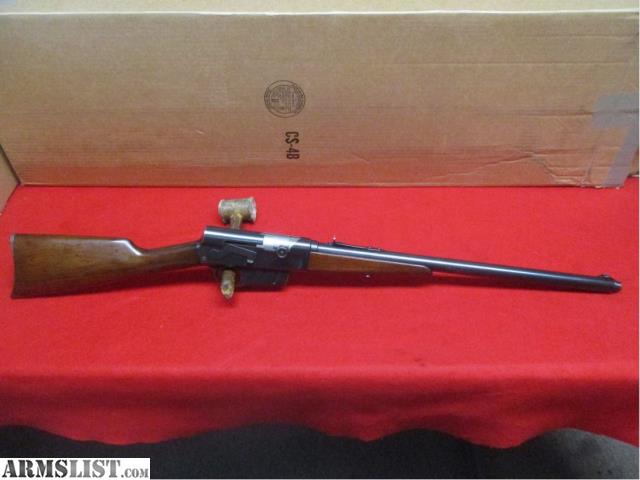
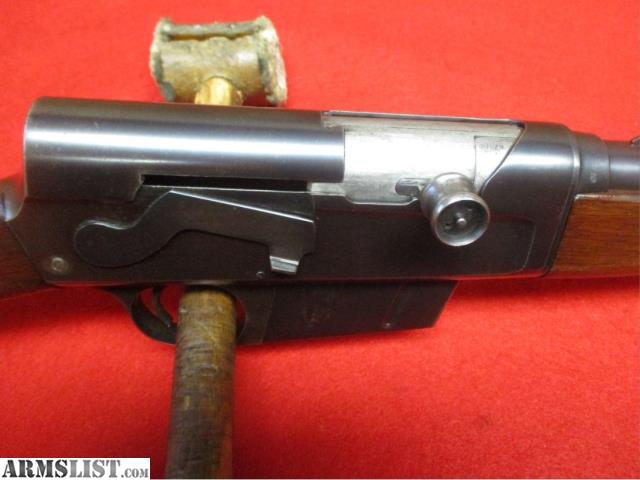
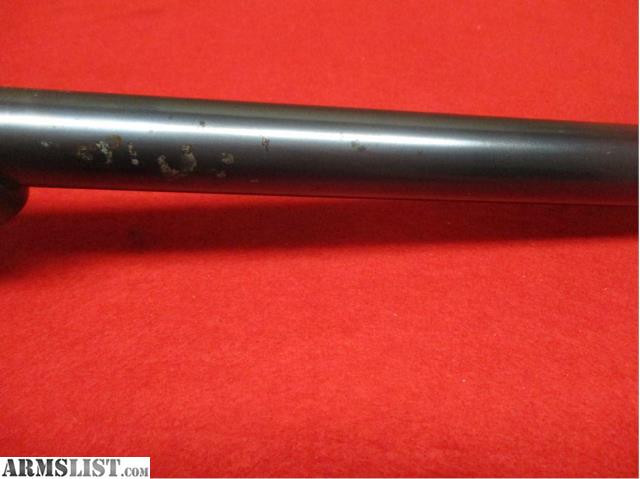
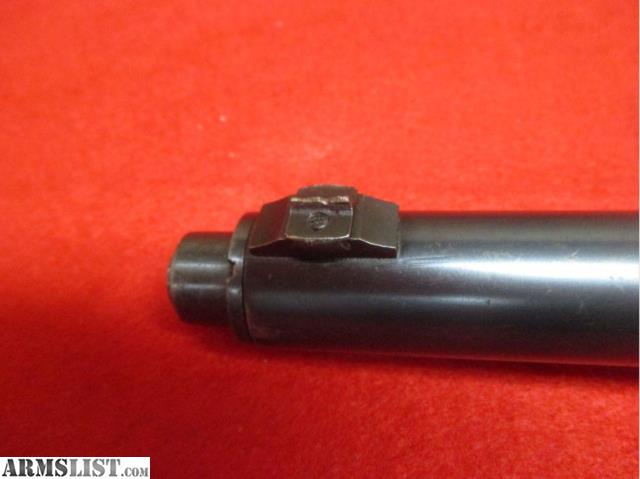
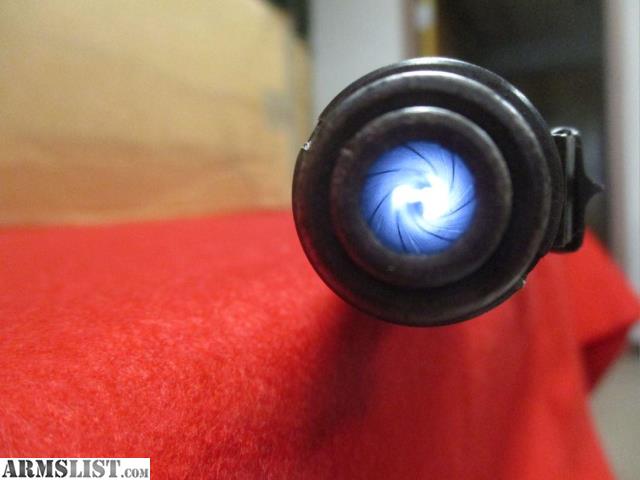
The Remington Model 8 is most remembered for its use by law enforcement in the ambush of Bonnie and Clyde in 1934. Designed by John Moses Browning, the famed inventor of the 1911 pistol and many other firearms, the Model 8 used the long-recoil method of operation as used in the Browning Auto-5 shotgun and the Browning M2 .50-caliber machine gun. This type of operation was used due to its greater reliability over gas-operation which back then could not be done with the powders then available. The only drawback to this method of operation is, in addition to the primary recoil movement of the ignition of the cartridge, there is a second, smaller recoil bump from the barrel stopping at its rear most position before moving back into the forward position. While this may sound uncomfortable, from personal experience it is not is not even noticeable. Like the Auto-5, the Model 81’s magazine has a capacity of 5 rounds. In this case, it is a box magazine fixed to the gun and is not intended to be removable, though some police models did have detachable magazines. These were not intended for civilian sales. The Model 81 was available in five different cartridges, all with interesting histories. These are the .25 Remington, .30 Remington, .32 Remington, .35 Remington, and the .300 Savage. For now, we’ll cover just the Remington rounds since this rifle is chambered for one of them. The .25, .30, .32, and .35 Remington cartridges were designed to complete with Winchester’s .25-35, .30-30, .32 Winchester Special, and .35 WSL cartridges. Winchester later introduced the improved .351 and .401 WSL cartridges in an effort to beat the .35 Remington. Ultimately, the only two cartridges that lasted into the 21st Century were the already popular Winchester 30-30 (introduced as far back as 1894), and the very effective .35 Remington. The .30 Remington however does have the distinction of being the basis for the modern 6.8 SPC cartridge. Although no longer popular, cases and reloading dies are available from a number of sources. It is effective on the same range of game as the .30-30 it was designed to compete with. The rifle shown here is was made in 1950 and is in good condition for its age (70 years old) though it has some external wear typical of hunting rifles with a history. The rifle’s forend has a Schnabel tip. The stock has a similar notch just behind the lower tang. All are very small and do not compromise the integrity of the stock. It is possible these denote the number of hunting kills taken with the rifle, but there is no way to verify this. The original rear sight has been supplemented with a tang-mounted, flip-up peep sight. This provides a longer sight radius resulting in greater long-range accuracy. The original rear sight can still be used of course. It has two blades. As for the finish, the receiver and barrel jacket both exhibit minor finish loss. The receiver’s loss occurs mostly on the bottom of the tang where the hand grips the rifle during firing. The barrel jacket has some spots on the right and left side as shown in the pictures. The front sight is broken, though it could be replaced. The butt plate shows a notable amount of surface rust, but this could be cleaned. On the other hand, the Model 8 is in great shape mechanically, and operates as it should. The trigger pull is consistent and short. The bore is in excellent condition. With proper ammo and a replacement front sight, this Model 8 would continue to be an effective short-range deer rifle.
 UPGRADE MY ACCOUNT NOW


 Premium Vendor Details



 !
!


 Phone
Phone
 Website
 Location
 Shipping

 Live Contest